

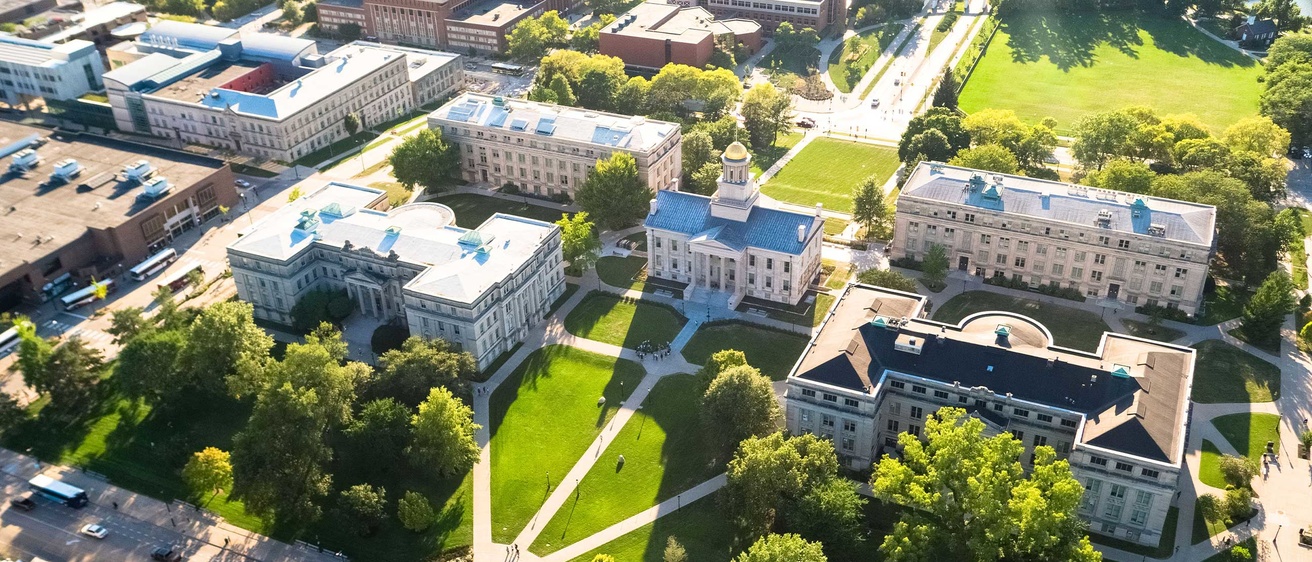

Tippie College of Business (University of Iowa)
Iowa City, United States of America


Part-time MBA, online or hybrid (45 credits)

<p><strong>Admissions</strong></p><p>Three intakes a year, in January, May and August, with corresponding deadlines. Admission is decided on file, with no requirement of permanent presence in the United States.</p><p><strong>No GMAT or GRE is required</strong> of an applicant with at least five years of full-time professional experience, a provision the school displays for its distance format. Below that threshold a score is requested, with waivers assessed case by case.</p><p>The file includes transcripts from every institution attended, a resume, a statement of goals and letters of recommendation. An international applicant submits a TOEFL, IELTS or Duolingo under the university’s thresholds.</p><p>As the precise file and waiver arrangements were not established from source during this review, they should be confirmed with the programme before filing.</p><p><strong>Who it is for</strong></p><p>The working professional, wherever they live, who wants an MBA from an accredited American public university without leaving their job or their country. Courses are followed online, with in-person options for those living in the region.</p><p>Eight concentrations are offered, from leadership to technology and artificial intelligence management, taking in data analysis, finance, marketing, innovation, strategy and communication.</p><p><strong>Costs</strong></p><p>Tuition and fees come to around <strong>$33,750</strong> for all forty-five credits, an amount found in a secondary source and to be confirmed with the programme. The programme takes a minimum of twenty-four months, and the duration can extend depending on the pace chosen.</p><p>That level is one of the lowest in the whole American corpus for a complete MBA, and it comes with no living costs and no consular formalities for a student following the programme from their own country.</p><p><strong>Outcomes</strong></p><p>The degree most often serves internal progression. Taken from abroad, it does not open Optional Practical Training, which requires a period of study on American soil.</p>

Executive MBA
<p><strong>Admissions</strong></p><p>Admission requires leadership experience and the employer’s agreement. The file includes transcripts, a resume, a statement of goals and letters of recommendation, with a main deadline in the summer.</p><p>An admission test is in principle not required at this level, the school assessing quantitative readiness on the professional record, but that rule was not confirmed from source. An international applicant submits an English test, TOEFL, IELTS or Duolingo, under the university’s thresholds.</p><p>This format does not lead to the F-1 student visa, which in practice reserves it for people already legally settled in the United States.</p><p><strong>Who it is for</strong></p><p>The established executive settled in the region who wants the same degree on a weekend rhythm, with an international component.</p><p><strong>Costs</strong></p><p>Tuition and fees come to around <strong>$67,000</strong> according to a secondary source, for a programme that can be completed in sixteen months. That amount was not confirmed on an official page during this review.</p><p>Funding comes mainly through the employer or through borrowing, as with most formats aimed at working executives.</p><p><strong>Outcomes</strong></p><p>Graduates progress within their organisation, with a marked concentration in Iowa and Midwest companies.</p>
Specialised masters
<p><strong>Admissions</strong></p><p>These programmes recruit recent graduates and early-career professionals, with deadlines specific to each, spread from autumn to spring.</p><p>The file includes transcripts, a resume, a statement of goals and letters of recommendation. A GMAT or GRE is required for the full-time forms, the part-time forms applying in principle the same flexibility as the distance MBA, a point to check programme by programme.</p><p>An international applicant submits a TOEFL, IELTS or Duolingo under the university’s thresholds, and comes under the F-1 visa for the on-campus forms.</p><p><strong>Who it is for</strong></p><p>The graduate or professional targeting a specific expertise: data analysis, finance or accounting. Each of these degrees exists in full-time and part-time form, which allows the pace to be matched to a working life.</p><p>The data analytics master’s, launched in 2014, saw the fastest growth at the school and was extended to several of the university’s sites.</p><p><strong>Costs</strong></p><p>Data compiled by the accrediting body put tuition at around <strong>$35,980</strong> for a non-resident and <strong>$23,453</strong> for an Iowa resident, for both the data analytics and the finance master’s. Those amounts were not confirmed on the school’s pages and the reference year is not established.</p><p>One methodological reservation is added: as these degrees are distinct and billed separately, they should in principle occupy separate sections, combined here for want of amounts verified from source.</p><p><strong>Outcomes</strong></p><p>Graduates target data analysis, corporate finance and audit roles, with a strong regional anchoring in the Midwest.</p>
Doctorate (PhD)
<p><strong>Admissions</strong></p><p>Admission is by field, among the school’s six, for autumn entry only and with a deadline early in the calendar year. The file includes a statement of purpose, letters of recommendation, transcripts and a resume.</p><p>An international applicant submits a TOEFL or IELTS, the university setting its own thresholds. Unlike the school’s professional formats, a GMAT or GRE is in principle required at doctoral level, but that requirement, any thresholds and the application fee were not established from source during this review.</p><p>As everywhere in the United States, doctoral entry is possible straight from a bachelor’s degree, with no master’s in between.</p><p><strong>Who it is for</strong></p><p>The researcher aiming at an academic career. The school organises its doctorate in six fields: accounting, data analytics, economics, finance, management and marketing, and publishes the list of its candidates on the academic job market.</p><p><strong>Costs</strong></p><p>This is the best-documented section on this page, and the most favourable. The school funds almost all of its admitted students, with an annual stipend of <strong>at least $32,000</strong>, <strong>tuition and fees covered in full</strong>, and comprehensive health insurance of which the university covers 90 %, the doctoral student paying $30 to $40 a month.</p><p>Funding is guaranteed for <strong>five years</strong> as a general rule, subject to progress, and its amount can vary from one year to the next. Review takes place automatically on filing the application, with no separate file, and the detail is communicated with the admission offer.</p><p>One rare provision deserves flagging for a doctoral student arriving with a family: <strong>family insurance policies</strong> are offered. Some departments add supplementary awards, summer funding and coverage of conference travel.</p><p>The stipend takes the form of a teaching or research assistant position, the most promising applicants being eligible for additional fellowships.</p><p><strong>Outcomes</strong></p><p>Doctoral graduates join the management and economics faculties of American and foreign universities, as well as the research departments of companies and public institutions. <strong>Key points</strong></p>

Souhaitez-vous être accompagné ?
Nos conseillers vous guident à chaque étape.