

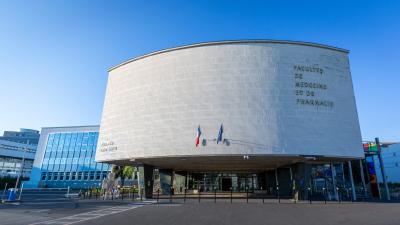
Université Clermont Auvergne
Clermont-Ferrand, France


Specific Health Access Pathway (PASS, 1 year)

<p><strong>Admissions</strong></p><p>Applications are made through Parcoursup for a candidate holding the French or European baccalauréat, the faculty recruiting chiefly within its Auvergne catchment, which gives a relative advantage to candidates from the region without closing the door to others. The baccalauréat specialisms also count: physics and chemistry and life and earth sciences are expected, the mathematics specialism remaining strongly recommended for the biostatistics teaching. A non-EU national holding a foreign secondary school leaving qualification falls under the <strong>prior admission application</strong>, the white file through the Études en France platform or the green file if they already reside in France, with the campaign closing on <strong>15 December</strong> and a TCF-DAP test required. The year's calendar is dense and published precisely: health major examinations from 15 to 17 December, then from 20 to</p><p>27 April, second-chance session from 8 to 19 June, and <strong>oral examinations from 29 June to 3 July</strong>.</p><p>Selection combines chiefly multiple-choice questions, sometimes short open-response questions, then orals for eligible candidates.</p><p><strong>Who it is for</strong></p><p>The Clermont specific health access pathway offers <strong>eight disciplinary minors</strong>, with varying capacity, among them economics and management. The admissions committee issues an explicit warning on the Parcoursup page: the candidate must check that their plan is indeed to become a <strong>doctor, pharmacist, dentist or midwife</strong>, this route not leading to physiotherapy. That precision avoids a costly error of direction, since a candidate aiming at rehabilitation must choose the rehabilitation portal from the point of applying on Parcoursup.</p><p><strong>Fees</strong></p><p>PASS falls within the first cycle: <strong>€178</strong> in national fees for <strong>2026-2027</strong>, plus <strong>€105</strong> for the student life contribution. A non-EU student who is not exempt pays <strong>€2,902</strong> in first-cycle differentiated fees. Means-tested scholarship holders are exempt from both the fees and the contribution, and French government scholarship holders benefit from exemption as of right, outside the quota of discretionary exemptions capped by the decree of <strong>19 May 2026</strong> at 30% of non-European students in 2026-2027, 25% in 2027-2028 and 20% from 2028-2029. The Clermont cost of living completes the financial advantage, a studio renting for between <strong>€380 and €520 a month</strong>, well below the level of the Paris or Lyon areas.</p><p><strong>Careers</strong></p><p>The pathway leads to four programmes, medicine, pharmacy, dentistry and midwifery, from a total of roughly <strong>320 places</strong> in the second year across all routes. Physiotherapy is excluded and falls to the rehabilitation portal alone. The faculty's capacity is rising on account of regional medical underprovision, a criterion that became a priority with the law of 27 June 2025.</p>

Health-Access Bachelor's Degrees (LAS, 3 years)
<p><strong>Admissions</strong></p><p>The same application routes as the specific pathway, Parcoursup or the <strong>prior admission application</strong> closing on <strong>15 December</strong> for a non-EU candidate. The national distribution observed generally places the degree route between 30 and 50% of total places, the specific pathway keeping the principal share. The modest size of the faculty moreover favours personal supervision, an argument the institution puts forward and one that distinguishes Clermont from the mass cohorts of Paris or Lyon.</p><p><strong>Who it is for</strong></p><p>The health-access bachelor's degree makes it possible to prepare a full disciplinary qualification while applying to the four medical programmes, the health option being added to the degree syllabus. As with the specific pathway, this route <strong>does not give access to physiotherapy</strong>, reserved for the rehabilitation portal, a distinction candidates frequently confuse. The particular value of this route lies in securing the qualification: a student not admitted continues their degree without a break and retains their second attempt.</p><p><strong>Fees</strong></p><p>The same first-cycle scale as the specific pathway: <strong>€178</strong> in national fees and <strong>€105</strong> for the student life contribution in <strong>2026-2027</strong>, and <strong>€2,902</strong> in differentiated fees for a non-EU student who is not exempt. <strong>Free</strong> student tutoring supports candidates on both routes, with registration to be made at the start of the year, which avoids recourse to paid private preparation.</p><p><strong>Careers</strong></p><p>Four programmes accessible, medicine, pharmacy, dentistry and midwifery, physiotherapy excluded. Successful candidates join the second year of the health programmes; the others complete their disciplinary degree to graduation and retain their second attempt for later years.</p>
Rehabilitation Portal (PASS-R, 1 year)
<p><strong>Admissions</strong></p><p>A candidate drawn to physiotherapy must <strong>tick this portal on Parcoursup at the point of submitting choices</strong>, no bridge being provided from the other routes during the year. That requirement of an early choice is the principal trap of the Clermont arrangement, all the more so since the Parcoursup page for the specific pathway refers explicitly to this portal. A candidate hesitating between medicine and rehabilitation must therefore decide before the academic year even begins, which calls for reflection started in the final year of school. A non-EU national falls under the <strong>prior admission application</strong>, closing on <strong>15 December</strong>, with a TCF-DAP test. The examination calendar differs from that of the specific pathway: first-semester papers are held from 8 to 17 December, against 15 to 17 for the health major.</p><p><strong>Who it is for</strong></p><p>The rehabilitation portal is the university's third route of access, and <strong>the only one that opens physiotherapy studies</strong>. That arrangement, particular to Clermont, clearly separates the medical programmes from the rehabilitation professions, where most French faculties group them within a single course.</p><p><strong>Fees</strong></p><p>The portal falls within the first cycle, on the same scale as the other two routes: <strong>€178</strong> in national fees and <strong>€105</strong> for the student life contribution in <strong>2026-2027</strong>, and <strong>€2,902</strong> in differentiated fees for a non-EU student who is not exempt. Continuing into a physiotherapy training institute after admission may on the other hand carry tuition specific to that institute, distinct from university fees and appreciably higher: this point should be checked before committing to the route.</p><p><strong>Careers</strong></p><p>This route opens physiotherapy studies exclusively, inaccessible through the specific pathway and through the degrees. A candidate not admitted has no bridge to the medical programmes during the year and must submit fresh choices the following year.</p>
Second and Third Cycles of Medical Studies
<p><strong>Admissions</strong></p><p>Access comes through passing the first year, whether the specific pathway, a health-access bachelor's degree or the rehabilitation portal according to the programme targeted. The faculty introduces its students to research by easing access to master's programmes and to the health institute's doctoral school, and encourages international exchange. The regulatory position should be followed closely. On <strong>17 April 2026</strong>, the ministers responsible for higher education and for health confirmed the end of PASS and the health-access bachelor's degrees, in favour of a single route organised in three blocks and applied for through Parcoursup, from the <strong>2027</strong> intake. The Conference of Deans of Medicine, in a letter of 25 March 2026, and then the National Academy of Medicine judged that timetable unrealistic and asked for postponement to <strong>2028</strong>; the government is holding to 2027 and no final decision has been published to date. The <strong>2026-2027</strong> intake remains governed in full by the arrangements described here.</p><p><strong>Who it is for</strong></p><p>After admission, the course continues to the State diploma of doctor of medicine, backed by the Clermont-Ferrand teaching hospital. The ten research units associated with the major national bodies offer placement and dissertation settings in fields from nutrition to neurology. The territorial anchoring directs part of clinical training towards community medicine, in a region where medical demography remains stretched and where placements in practices and outlying hospitals are numerous.</p><p><strong>Fees</strong></p><p>The second cycle falls on the master's-level scale: <strong>€255</strong> in national fees for <strong>2026-2027</strong>, plus <strong>€105</strong> for the student life contribution, with differentiated fees for non-EU students standing at <strong>€3,950</strong> at this level. The third cycle escapes that regime, students enrolled in the third cycle of health studies <strong>not being subject to differentiated fees</strong>. Hospital students receive placement allowances from the fourth year onwards, and residents are salaried.</p><p><strong>Careers</strong></p><p>Graduates reach the third cycle through the national examinations at the end of the second cycle, which replaced the former national ranking examinations in <strong>2023</strong>: the <strong>national digital examinations</strong> in October of the sixth year count for 60% of the mark, the <strong>objective structured clinical examinations</strong> in the spring for 30%, and the training record for 10%. The single national ranking has given way to a <strong>national matching procedure</strong> between the candidate's choices of specialty and region and the posts open. They then practise in France or, subject to recognition of qualifications, abroad.</p>

Souhaitez-vous être accompagné ?
Nos conseillers vous guident à chaque étape.