

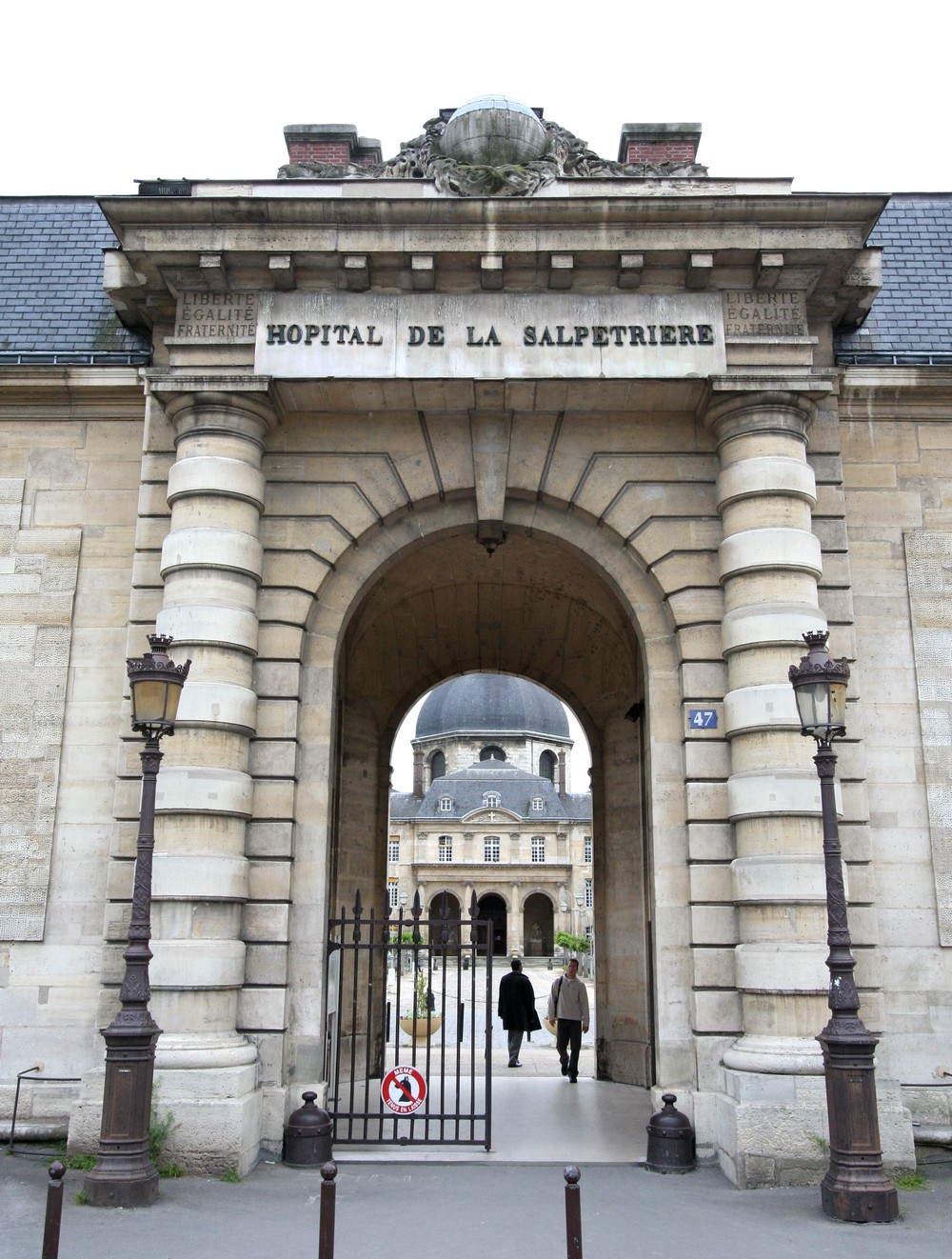
Sorbonne Université
Paris, France


Specific Health Access Pathway (PASS, 1 year)

<p><strong>Admissions</strong></p><p>Applications are made through Parcoursup for a candidate holding the French or European baccalauréat. A non-EU national holding a foreign secondary school leaving qualification falls under the <strong>prior admission application</strong>, the white file from their country of residence through the Études en France platform, or the green file if they already reside in France, with the campaign closing on <strong>15 December</strong> and a TCF-DAP test required. Selection is then decided in two stages: up to 50% of the places in each programme are awarded on the written papers alone, the other eligible candidates sitting orals. The written papers are held in December and in May, the orals in June at 91 boulevard de l'Hôpital, and the results are published in July.</p><p><strong>Who it is for</strong></p><p>PASS is addressed to the school leaver with a strong academic record aiming at health studies by the shortest route. It combines a health block of 48 credits with a disciplinary minor of 12 credits, in science or in the humanities. The workload is heavy and precisely set: <strong>492 hours of teaching</strong> and <strong>60 credits to be passed with no compensation between the two blocks</strong>. That absence of compensation is decisive, since a failed block cannot be made up by the other. The minor must moreover be passed with an average of 10 out of 20.</p><p><strong>Fees</strong></p><p>PASS falls within the first cycle: <strong>€178</strong> in national fees for <strong>2026-2027</strong>, plus <strong>€105</strong> for the student life contribution. A non-EU student who is not exempt pays <strong>€2,902</strong> in first-cycle differentiated fees. Means-tested scholarship holders are exempt from both the fees and the contribution, and French government scholarship holders benefit from exemption as of right, outside the quota of discretionary exemptions capped by the decree of <strong>19 May 2026</strong> at 30% of non-European students in 2026-2027, then 25% and 20%.</p><p><strong>Careers</strong></p><p>Of the 300 places reserved for PASS in <strong>2026-2027</strong>, <strong>215 fall to medicine</strong>, which puts the rate of direct access to that programme at around 15%. A student who passes PASS without being admitted to health studies keeps a way out: they enter the second year of the bachelor's degree corresponding to their minor, and so do not lose the year. Successful candidates continue into the second year of medicine, midwifery, dentistry or pharmacy, according to their rank and the partner institution.</p>

Health-Access Bachelor's Degrees (LAS, 3 years)
<p><strong>Admissions</strong></p><p>The same application routes as PASS, Parcoursup or the <strong>prior admission application</strong> closing on <strong>15 December</strong> for a non-EU candidate. Selection differs from that of PASS: candidates are first retained on their academic record before sitting the orals. An attempt is counted from the moment a candidate takes the oral examinations, whatever the outcome, which limits the number of possible tries. One reservation finally weighs on the apparent parity of volumes: only <strong>3 medicine places</strong> are open to firstyear bachelor's students, the route serving as a springboard towards the later years.</p><p><strong>Who it is for</strong></p><p>The health-access bachelor's degree suits the school leaver who wants to secure a full university qualification while aiming at health studies. Sorbonne Université offered fifteen of them for the <strong>20252026</strong> intake, from the sciences to philosophy. The student follows a disciplinary degree supplemented by a health option of 10 credits, which must be passed in order to apply to the medical programmes. These degrees hold <strong>301 places</strong> in the second year for <strong>2026-2027</strong>, against 300 for PASS, a parity that distinguishes this faculty from those where one route clearly dominates.</p><p><strong>Fees</strong></p><p>The same first-cycle scale as PASS: <strong>€178</strong> in national fees and <strong>€105</strong> for the student life contribution in <strong>2026-2027</strong>, and <strong>€2,902</strong> in differentiated fees for a non-EU student who is not exempt. The three-year duration multiplies that cost accordingly, which makes obtaining a French government scholarship, exempting as of right, more decisive still than on PASS.</p><p><strong>Careers</strong></p><p>Successful candidates join the second year of the health programmes; the others complete their disciplinary degree to graduation. A candidate aiming at medicine must plan to apply in the second or third year of the degree, first-year places being limited to three.</p>
Second and Third Cycles of Medical Studies
<p><strong>Admissions</strong></p><p>Access comes through passing the first year, whether PASS or a health-access bachelor's degree, the choice of programme being settled according to the rank obtained. The regulatory position should be followed closely. On <strong>17 April 2026</strong>, the ministers responsible for higher education and for health confirmed the end of PASS and the health-access bachelor's degrees, in favour of a single route organised in three blocks and applied for through Parcoursup, from the <strong>2027</strong> intake. The Conference of Deans of Medicine, in a letter of 25 March 2026, and then the National Academy of Medicine judged that timetable unrealistic and asked for postponement to <strong>2028</strong>; the government is holding to 2027 and no final decision has been published to date. The <strong>2026-2027</strong> intake remains governed in full by the arrangements described here.</p><p><strong>Who it is for</strong></p><p>After the first year, the course continues to the State diploma of doctor of medicine, with entry into hospital placements earlier than elsewhere. The clinical years begin as early as the third year, which brings practical training appreciably forward compared with courses where hospital contact remains later. The faculty draws for this on the hospitals of the Paris public hospital system, among them La Pitié-Salpêtrière and Saint-Antoine. Since the teaching framework is national and identical throughout France, the difference between faculties turns less on content than on supervision and clinical placements.</p><p><strong>Fees</strong></p><p>The second cycle falls on the master's-level scale: <strong>€255</strong> in national fees for <strong>2026-2027</strong>, plus <strong>€105</strong> for the student life contribution, with differentiated fees for non-EU students standing at <strong>€3,950</strong> at this level. The third cycle escapes that regime, students enrolled in the third cycle of health studies <strong>not being subject to differentiated fees</strong>. Hospital students receive placement allowances from the fourth year onwards, and residents are salaried.</p><p><strong>Careers</strong></p><p>Graduates reach the third cycle through the national examinations at the end of the second cycle, which replaced the former national ranking examinations in <strong>2023</strong>: the <strong>national digital examinations</strong> in October of the sixth year count for 60% of the mark, the <strong>objective structured clinical examinations</strong> in the spring for 30%, and the training record for 10%. The single national ranking has given way to a <strong>national matching procedure</strong> between the candidate's choices of specialty and region and the posts open. They then practise in France or, subject to recognition of qualifications, abroad.</p>

Souhaitez-vous être accompagné ?
Nos conseillers vous guident à chaque étape.