

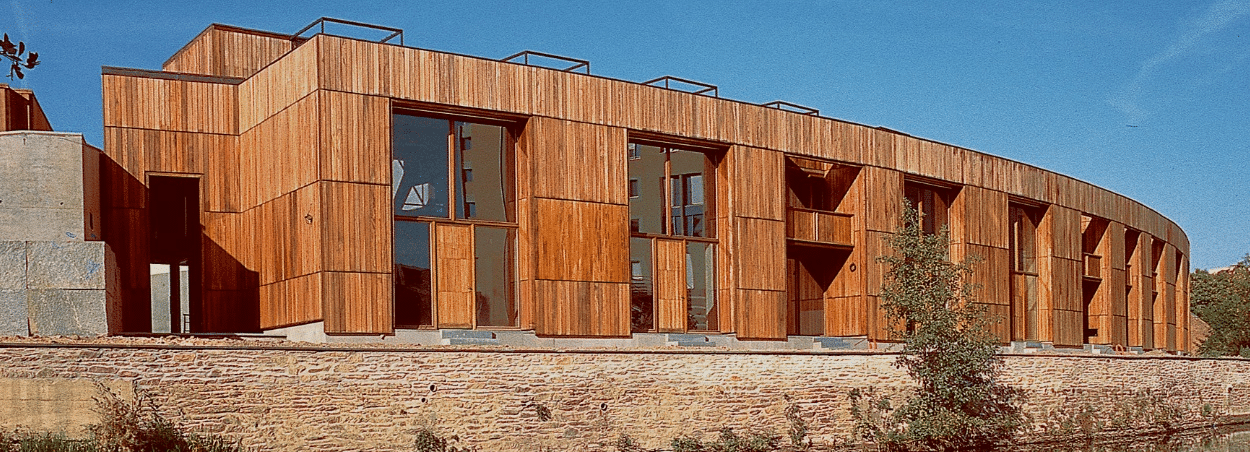

ENSA Bretagne
Rennes, France


Bachelor's Degree in Architecture (3 years)

<p><strong>Admissions</strong></p><p>Admission goes through Parcoursup for a French or European school leaver, then an interview. The school has removed the conventional statement of motivation and advises instead <strong>filling in every freetext field of the application</strong>: who one is, one's background, hobbies, interests, environment. It explicitly recommends proofreading and <strong>having the file proofread</strong>, rare advice that reflects the real weight given to writing. One question in the questionnaire sets the tone: the candidate must relate a past experience, a building visited, a journey, an exhibition, a book or a film, describing the <strong>emotions felt</strong> and how they might nourish their learning. One reservation concerns candidates changing direction: those who have followed a two-year higher education course <strong>are not permitted to apply</strong> through Parcoursup and fall under another route. A non-EU national holding a foreign qualification falls under the <strong>prior admission application</strong>, the blue file specific to schools of architecture, closing on <strong>15 December</strong>.</p><p><strong>Who it is for</strong></p><p>The bachelor's cycle leads to the diploma of studies in architecture. The published expectations go beyond the national framework: the school declares itself particularly attentive to the <strong>capacity to cross analyses and fields of knowledge</strong>, to autonomy, to organisational capacity and to the quality of expression. Recruitment remains open to all three baccalauréat streams, although 86% of those admitted come from the general one.</p><p><strong>Fees</strong></p><p><strong>€391</strong> a year for <strong>2026-2027</strong>, plus <strong>€105</strong> for the student life and campus contribution. That amount applies <strong>whatever the nationality</strong>, the school coming under the Ministry of Culture and therefore escaping the €2,902 in differentiated fees charged at bachelor's level at university. Scholarship holders are exempt from both the fees and the contribution. Since the school charges no file-handling fee, the application itself is free, unlike at Versailles, Bordeaux, Lille and Paris-Est.</p><p><strong>Careers</strong></p><p>Roughly ninety places are offered in the first year, from 628 students in total. The bachelor's cycle confers the diploma of studies in architecture and opens continuation into the master's.</p>

Master's Degree, State Diploma and Engineering Route
<p><strong>Admissions</strong></p><p>A particular route exists for engineering students: those of the Institut national des sciences appliquées of Rennes, in the <strong>civil and urban engineering</strong> specialism, may enter straight into the <strong>first year of the master's</strong>. The file comprises results and a statement of motivation expressing interest in architecture, a committee meeting <strong>each year in July</strong> to select candidates after an individual interview. That double route differs from those of Lyon, Toulouse or Strasbourg: it does not require commitment from the first year, but allows a late switch into architecture. For a French-speaking engineer already qualified or nearing the end of their course, that is an appreciably more practicable configuration. A non-EU candidate falls under the <strong>prior admission application</strong>, the blue file, closing on <strong>15 December</strong>.</p><p><strong>Who it is for</strong></p><p>The master's degree leads to the State diploma of architect and continues the pedagogical project of complementary knowledge the school claims. A master's in urban planning is moreover run with the university of Rennes and the institute of political studies, training planners for client-side and urban project work, preparing students for the role of commissioning body rather than designer, an outcome architecture courses rarely address.</p><p><strong>Fees</strong></p><p><strong>€537</strong> a year for the master's in <strong>2026-2027</strong>, plus <strong>€105</strong> for the student life contribution, <strong>whatever the nationality</strong> for the State diploma of architect. One reservation concerns the <strong>master's in urban planning run with the university of Rennes and the institute of political studies</strong>: being a university master's, it may subject non-EU candidates to differentiated fees of €3,950, like the design master's at Grenoble. This point should be checked with the institution of registration before applying.</p><p><strong>Careers</strong></p><p>The State diploma opens the design professions. The engineering route allows a graduate in civil and urban engineering to switch into architecture without restarting the course from the beginning, and the urban planning master's prepares students for client-side roles, in local authorities or development agencies.</p>
Licence to Practise in One's Own Name (HMONP, 1 year)
<p><strong>Admissions</strong></p><p>An alternating arrangement exists, with the choice of host organisation open <strong>until 31 August</strong>, which leaves time to find a practice after the academic year ends. For a French-speaking architect already holding a recognised qualification, this route is the decisive step towards practising in one's own name in France. Defences and applications follow their own calendar, distinct from that of Parcoursup. The school closes from 24 July to 24 August, a period to build into the calendar of administrative steps.</p><p><strong>Who it is for</strong></p><p>This qualification is the final year of the course, accessible after the State diploma, and conditions independent practice of the profession. Its content is quantified by the school: <strong>six months minimum of professional immersion</strong> and <strong>150 hours of theoretical teaching</strong>, spread across the year. That proportion deserves understanding: most of the training takes place in practice, the school intervening only for a limited theoretical volume.</p><p><strong>Fees</strong></p><p>The HMONP falls under the Ministry of Culture scale and is not subject to differentiated fees. Since the professional immersion of at least six months is carried out under contract in a practice, it provides an income during the year of training. The theoretical volume limited to 150 hours moreover allows a post to be kept for most of the year, and the choice of host organisation open until 31 August leaves time to secure that contract.</p><p><strong>Careers</strong></p><p>The qualification opens registration with the order of architects and the capacity to sign planning applications in one's own name. For an architect trained outside France holding a recognised qualification, it is the decisive step towards independent practice.</p>

Souhaitez-vous être accompagné ?
Nos conseillers vous guident à chaque étape.