

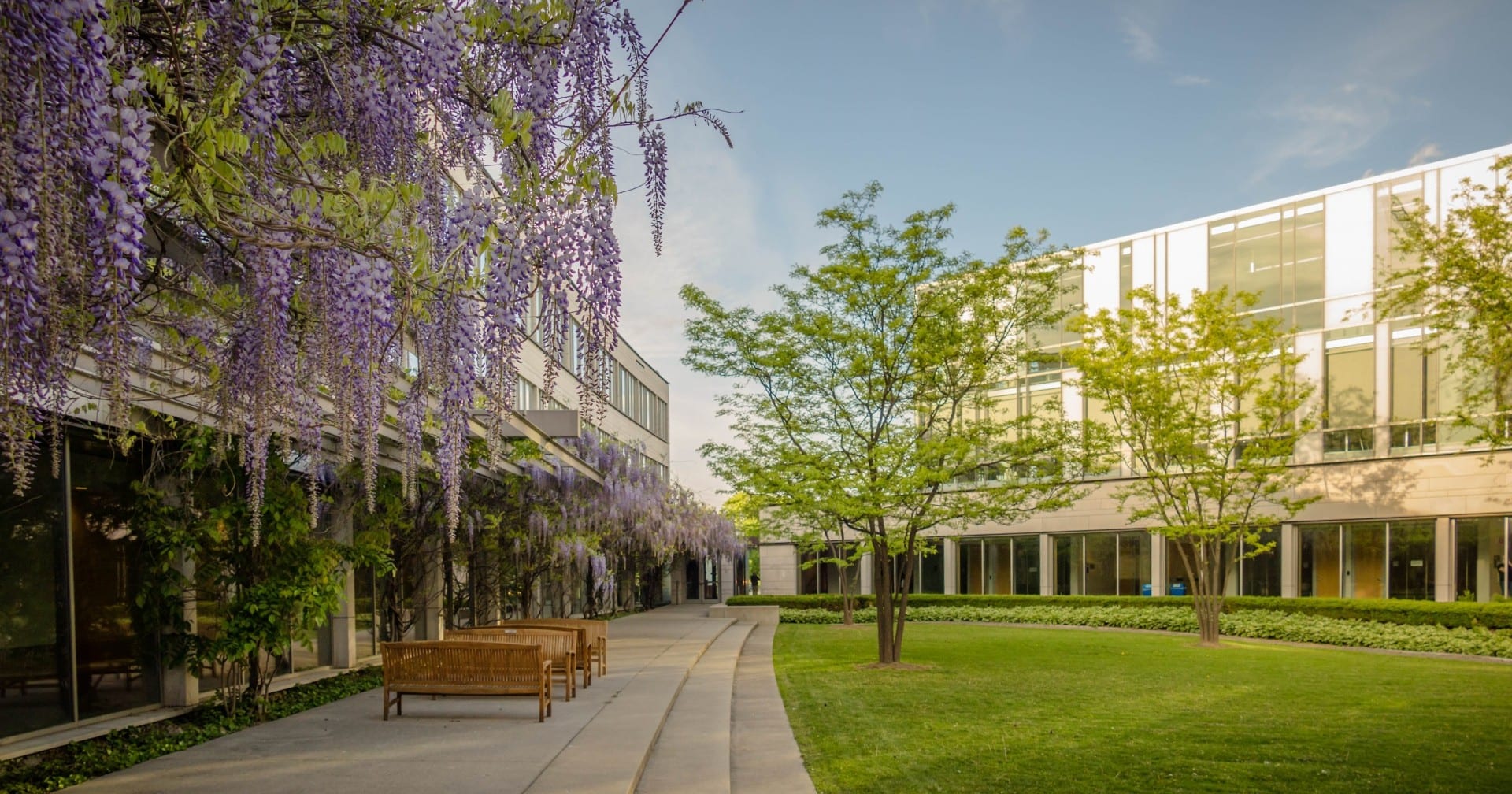

York University, Schulich School of Business
Toronto, Canada


Bachelor of Business Administration (BBA)

<p><strong>Admissions</strong></p><p>The academic record and the supplementary application carry equal weight. For Ontario pupils, the recent threshold lay between 91.5 and 92%, with English and final-year mathematics compulsory. The university assesses foreign qualifications according to the university entrance standards of the country of origin. English: IELTS <strong>7.0</strong>, TOEFL <strong>5.0</strong> on the new 1-6 scale or Duolingo <strong>130</strong>. 2027 intake: application before <strong>15 January 2027</strong>, supplementary application before 1 February. An early round closes on 6 November 2026.</p><p><strong>Who it is for</strong></p><p>The Bachelor of Business Administration is a four-year honours bachelor's degree of <strong>120 credits</strong>, taken on the Keele campus. It is aimed at the baccalauréat holder who wants to enter business studies from first year, with no preparatory class. From third year, the student chooses up to two specialisations among eleven, including accounting, finance, marketing, business analytics, strategy, international business and sustainability. The entering class has about <strong>500</strong> students.</p><p><strong>Fees</strong></p><p>Amounts converted at the rate of <strong>CA$1 = €0.62</strong>. York publishes the BBA fee only through the online tables of its financial services, by status and year of entry: the applicant reads their amount there in a few minutes, before building a budget and a permit application. As a benchmark for 2026-27 in business: €24,800 to <strong>€27,280</strong> (CA$40,000 to CA$44,000) for 30 credits for internationals, plus €25 to €31 (CA$40 to CA$50) of fees per credit, or up to <strong>€930</strong> (CA$1,500) a year, and <strong>€714</strong> (CA$1,151) of health cover. The Canadian pays €4,960 to €6,820 (CA$8,000 to CA$11,000).</p><p><strong>Careers</strong></p><p>The school's 2025 salary survey shows <strong>88%</strong> of graduates hired within nine months, with average total compensation of <strong>€47,740</strong> (CA$77,000). Employers cited are the banks BMO, CIBC and RBC, the firms EY and KPMG, and groups such as L'Oréal, Procter & Gamble, General Mills or Bell. The accounting specialisation covers the prerequisites for the Chartered Professional Accountant (CPA) designation. The school describes no co-op programme, but internships and a careers service. The degree gives access to the post-graduation work permit.</p>

Specialised master's degrees
<p><strong>Admissions</strong></p><p>A four-year undergraduate degree and a <strong>B+</strong> average over the last two years is required. The holder of a three-year degree must show one year of experience for the MMgt and the MF. No GMAT or GRE for the MMgt and the MBAN; the MF waives it for holders of CFA level 1. English: IELTS <strong>7.0</strong> (6.5 per component) or TOEFL <strong>5.0</strong> on the new 1-6 scale. The application brings together two essays, a timed essay, two videos, a CV and two references. September 2027: rounds of 21 October 2026, 20 January, 3 March and 26 May 2027.</p><p><strong>Who it is for</strong></p><p>Nine master's degrees serve distinct audiences. The Master of Management (MMgt), in twelve months, is aimed at graduates of disciplines other than business, with less than two years of experience. Quantitative profiles aim for finance (MF), business analytics (MBAN) or artificial intelligence (MMAI). Then come marketing (MMKG), supply chain management (MSCM), real estate and infrastructure (MREI), health administration (MHIA) and accounting (MAcc), in sixteen months. The MMgt and the MF start in September, the MBAN and the MAcc in May.</p><p><strong>Fees</strong></p><p>Autumn 2026 fee schedule, ancillary fees included. The international student pays <strong>€44,859</strong> (CA$72,354) for the MMgt or the MHIA, or €14,953 (CA$24,118) per term. The MF and the MBAN cost <strong>€57,635</strong> (CA$92,960), the MMAI, the MMKG, the MREI and the MSCM <strong>€57,631</strong> (CA$92,954), the MAcc <strong>€59,818</strong> (CA$96,480) over four terms. The Canadian student pays from €17,247 (CA$27,817) to €34,347 (CA$55,399). A confirmation deposit of €1,860 (CA$3,000) is deducted from the first term.</p><p><strong>Careers</strong></p><p>The MF covers a large part of the CFA curriculum and at least 70% of the first FRM exam; its graduates join investment banking, asset management and risk. The MAcc, accredited by CPA Ontario, leads to the profession's common final examination. The MBAN rests on an eight-month consulting project and gives access to Vector Institute scholarships of <strong>€10,850</strong> (CA$17,500). Recruiters cited include Deloitte, KPMG, PwC, TD, RBC, Scotiabank, Bell and Amazon. No dated salary by programme was read. These degrees give access to the post-graduation work permit.</p>
MBA and Executive MBA
<p><strong>Admissions</strong></p><p>The MBA requires an undergraduate degree with a <strong>B</strong> average over the last two years, a GMAT or GRE, and at least <strong>two years</strong> of full-time experience after the degree. English: IELTS <strong>7.0</strong> (6.5 per component) or TOEFL <strong>5.0</strong> on the new 1-6 scale (4.5 per component). Added to this are written and video essays, two references and, by invitation, an interview. For September 2027, foreign applicants file by <strong>3 March 2027</strong> at the latest. The Executive MBA asks for eight years of experience, with no GMAT as a general rule.</p><p><strong>Who it is for</strong></p><p>The MBA is taken full time in 16 to 20 months, or part time in 36 to 40 months, with intakes in September and January and more than fifteen specialisations, from finance to consulting, health, real estate and sustainability. One variant, the Tech MBA, targets digital careers. The accelerated format, in 8 to 12 months, is reserved for holders of a BBA or a BCom from a Canadian university. The Kellogg-Schulich Executive MBA, in 17 months from January, is aimed at seasoned executives.</p><p><strong>Fees</strong></p><p>Autumn 2026 fee schedule, ancillary fees included: the international full-time MBA student pays <strong>€19,223</strong> (CA$31,005) per term, or about <strong>€76,892</strong> (CA$124,019) for four terms, against €45,796 (CA$73,865) for a Canadian. The Tech MBA comes to <strong>€84,484</strong> (CA$136,265). Part time requires a foreigner to check its compatibility with the study permit. The Executive MBA of the 2027-28 cohort costs <strong>€98,869</strong> (CA$159,465.66) for a foreigner, €71,901 (CA$115,968.78) for a Canadian, textbooks, meals and the week at Kellogg included.</p><p><strong>Careers</strong></p><p>The school states that <strong>91%</strong> of MBA graduates are hired within six months, for average total compensation of <strong>€59,258</strong> (CA$95,578), by 110 companies including Amazon, CIBC, Deloitte, IBM, TD and Procter & Gamble; the survey year is not specified. The Financial Times 2025 ranks the Executive MBA in the world top 35. Scholarships exist for foreigners, including the SEED Global Scholarship, reserved for certain regions. The MBA gives access to the post-graduation work permit. The Executive MBA ends with a stay in Costa Rica or Tanzania.</p>
Doctorate (PhD in Administration)
<p><strong>Admissions</strong></p><p>A master's in a related field with a <strong>B+</strong> average is required. A GMAT or GRE less than five years old is demanded, the school recommending 650 on the classic GMAT, 595 on the GMAT Focus or 320 on the GRE. English: IELTS <strong>7.5</strong> or TOEFL <strong>5.0</strong> on the new 1-6 scale, except after one year of full-time study at an English-speaking university. The application brings together a statement of research interests, three academic references and a CV. Deadline for autumn 2027: <strong>1 December 2026</strong>. Scores are expected before 15 December. Application fee: €93 (CA$150).</p><p><strong>Who it is for</strong></p><p>The PhD in Administration trains researchers destined for academic careers. It takes 48 to 72 months, with full time compulsory during the first two years, in seven fields: accounting, finance, marketing, operations management and information systems, organisation studies, strategic management and sustainability. The route has four stages: coursework, comprehensive examination, defence of the thesis proposal, then thesis and oral defence. The number of places per field is not published.</p><p><strong>Fees</strong></p><p>Funding guaranteed: <strong>€26,660</strong> (CA$43,000) a year for internationals, €18,600 (CA$30,000) for a Canadian, five years at most, subject to full-time study and progress. York publishes 2026-27 tuition only through the online tables of its financial services, to be read before any budget. As a benchmark, in 2025-26 the foreigner paid <strong>€3,906</strong> (CA$6,299.63) per term, fees included, or €11,717 (CA$18,898.89) a year, and the Canadian €1,076 (CA$1,735.14) per term. Bonus of €1,240 (CA$2,000) for a thesis proposal defended before 15 May in 3rd year.</p><p><strong>Careers</strong></p><p>The doctorate prepares for professor and researcher posts in business schools. The programme page gives neither a named list of placements nor a dated rate. Once tuition is deducted, the funding leaves a foreign doctoral student about <strong>€14,943</strong> (CA$24,101.11) a year at the 2025-26 schedule, Qiryna calculation, to be compared with campus rents of €2,790 to €4,960 (CA$4,500 to CA$8,000) per term. The doctorate is exempt from the provincial attestation letter and gives access to the post-graduation work permit.</p>

Souhaitez-vous être accompagné ?
Nos conseillers vous guident à chaque étape.